
Morocco National Football Team vs Europe: 2026 Edge
Morocco National Football Team vs Europe: 2026 Edge
The Morocco national football team is one of Africa’s most tactically advanced sides, representing Morocco under the Royal Moroccan Football Federation in CAF and FIFA competitions. Its defining achievement is a historic fourth-place finish at the 2022 FIFA World Cup in Qatar, where Morocco became the first African team to reach a World Cup semifinal. The Atlas Lions also won the 1976 Africa Cup of Nations and have developed a player pathway connecting the Botola Pro league with major European clubs such as Paris Saint-Germain, Bayern Munich, and Paris Saint-Germain-era academy networks. Morocco’s advantage is not simply individual talent: it is defensive structure, transition speed, goalkeeper quality, and a squad shaped by both Moroccan and European football cultures. For 2026, evaluate Morocco through tactical matchups, injury news, expected lineups, and opponent quality rather than reputation alone.
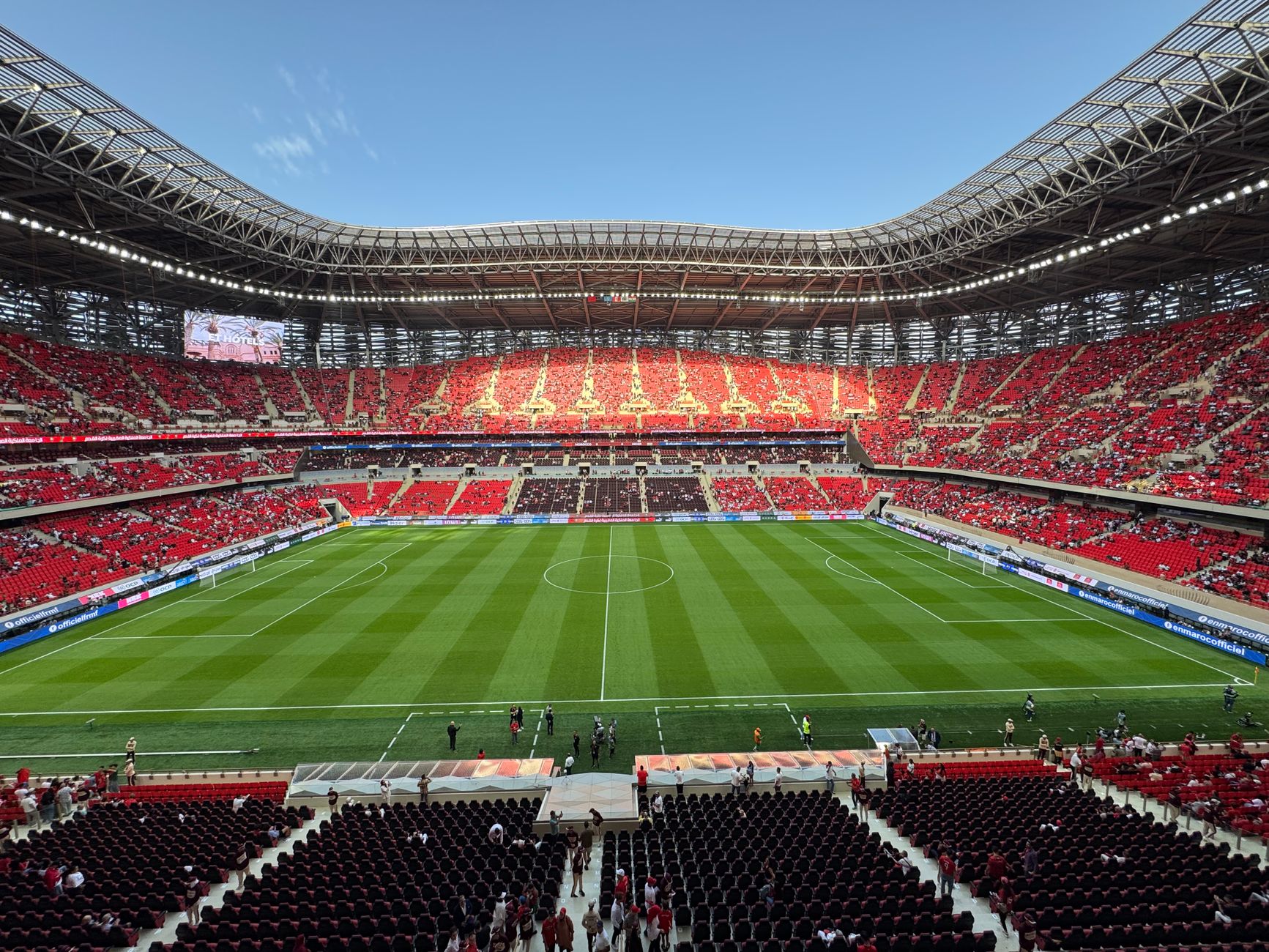
Photo by Earth Photart on Pexels
Morocco’s rise has changed the probability model for African football at the highest level. Before Qatar 2022, many analysts treated an African semifinal as possible but low-probability; Morocco then eliminated Belgium, Spain, and Portugal before losing 2–0 to France in the semifinal. That sequence matters because it demonstrated repeatable strengths rather than one lucky result: compact defending, disciplined spacing, rapid counterattacks, and emotional resilience in knockout football. According to FIFA’s official World Cup archive, Morocco’s 2022 campaign belongs among the tournament’s most significant historical performances, while CAF remains the primary governing authority for African national-team competitions. Football Compass follows these developments with match predictions, tactical breakdowns, player statistics, and 2026 World Cup coverage, but the useful question is always more precise: what does Morocco do well, and which opponent can force it away from that plan?
If you want the wider tournament context before comparing teams, start with our
If you compare Morocco with European opposition: measure defensive structure first
Morocco should be assessed against European opposition through tactical compatibility, not a simple ranking comparison. The Atlas Lions’ 2022 results against Belgium, Spain, and Portugal showed that a compact mid-block can reduce central passing lanes and make possession inefficient. However, teams with fast switches, aggressive full-backs, and sustained counter-pressing can stretch Morocco horizontally and create a different risk profile.
The first variable is defensive distance. Morocco’s defenders and midfielders generally prefer to remain connected, often protecting the area between the lines before pressing decisively when a pass enters a predictable zone. That reduces the opponent’s expected value from central attacks, because a blocked through-ball or forced backward pass is more likely than a clean shot. In practical terms, a team can have 65 percent possession and still produce fewer dangerous chances if Morocco controls the central corridor.
The second variable is transition quality. When Morocco wins the ball, the first forward pass frequently targets a winger, overlapping full-back, or mobile attacking midfielder. Achraf Hakimi gives the right side unusual acceleration and technical quality, while players such as Sofyan Amrabat have historically supplied ball recovery and defensive balance. The key is not merely speed; it is the number of players arriving behind the first runner. A counterattack with two supporting options has a much higher probability of becoming a shot than an isolated sprint.
- Track Morocco’s defensive line height during the first 20 minutes.
- Record whether the opponent attacks through the center or uses rapid diagonal switches.
- Compare Morocco’s ball recoveries with shots created within 15 seconds.
- Check whether Hakimi or the active full-back is being forced into repeated defensive sprints.
The contrarian point is that Morocco does not necessarily need more possession to improve its winning probability. Against a superior possession side, a controlled 35–45 percent share can be strategically optimal if it produces better transition locations and limits high-quality chances. That is why Football Compass evaluates field position and shot quality alongside possession percentage.

Photo by Kindel Media on Pexels
If you study Morocco’s history: use tournament milestones, not nostalgia
Morocco’s football history combines African success, regular continental relevance, and a rare World Cup breakthrough. The national team reached the 1986 World Cup round of 16, became the first African team to win a World Cup group, and later produced its best-ever World Cup finish in Qatar in 2022. Its major continental title came at the 1976 Africa Cup of Nations, while Morocco has also remained a frequent participant in CAF qualification cycles.
The Royal Moroccan Football Federation, commonly abbreviated as FRMF, has invested in infrastructure, coaching development, and national-team preparation. The Mohammed VI Football Academy near Rabat is a visible symbol of that approach, supporting a broader ecosystem that includes youth development and professional competition. Morocco’s domestic football structure is led by Botola Pro, with clubs such as Wydad AC and Raja CA carrying substantial continental experience through CAF Champions League competition.
A useful timeline looks like this:
- 1976: Morocco wins the Africa Cup of Nations, its first senior continental title.
- 1986: Morocco reaches the World Cup round of 16 in Mexico.
- 2018: Morocco returns to the World Cup after a 20-year absence.
- 2022: Morocco reaches the semifinal and finishes fourth in Qatar.
- 2026: Morocco enters a larger North American World Cup era involving the United States, Canada, and Mexico.
These dates are not decorative trivia. They reveal a pattern: Morocco’s biggest gains followed improvements in defensive organization and player development rather than a single golden generation appearing overnight. The team’s ceiling rises when experienced European-based players are combined with technically secure domestic or regional options. For historical background, Britannica’s Morocco overview provides useful national context, while FIFA records offer the competition-specific evidence.
“Morocco became the first African team to reach a World Cup semifinal,” a concise description used repeatedly in official tournament histories, captures the achievement, but not the mechanism behind it. The mechanism was repeatable preparation: protect the box, defend as a unit, attack the space behind advanced opponents, and avoid unnecessary structural risks.
Want a data-led way to compare Morocco’s past tournament performances?
If you assess the 2026 outlook: separate the core from the variables
The Morocco national football team’s 2026 outlook depends on squad continuity, opponent draw, player availability, and its ability to create against deeper defenses. The strongest baseline assumption is that Morocco remains difficult to break down, but that assumption should not be confused with guaranteed attacking production. In expected-value terms, its floor is supported by defensive organization; its tournament ceiling depends on whether the front line converts limited opportunities.
Which players shape Morocco’s tactical identity?
Morocco’s most influential established names include goalkeeper Yassine Bounou, defender Achraf Hakimi, midfielder Sofyan Amrabat, midfielder Azzedine Ounahi, and attacking players such as Hakim Ziyech when selected and available. Player roles can change under the head coach and from match to match, so a responsible preview should never treat an old lineup as a confirmed 2026 XI.
Bounou’s importance extends beyond saves. A goalkeeper who handles crosses, controls the six-yard area, and distributes calmly can lower the opponent’s pressure value by preventing second phases. Hakimi changes Morocco’s attacking geometry because he can provide width, overlap, recovery speed, and an outlet during defensive transitions. Amrabat’s value is similarly structural: he can screen the back four, close passing lanes, and support the first pass after a turnover.
Ounahi offers a different dimension through ball carrying and resistance under pressure. Against a high press, his ability to escape the first challenge can turn a defensive recovery into a midfield advantage. Ziyech, when involved, adds left-footed delivery and creative passing, but his influence depends heavily on whether Morocco can give him receiving space between the opponent’s midfield and defense.
A squad checklist for 2026 should include:
- Confirmed roster announcements from FRMF.
- Club minutes during the final six months before the tournament.
- Injury status and training participation.
- Preferred set-piece takers.
- The replacement quality for every defensive starter.
- Whether Morocco has a reliable solution against a low block.
The information edge many previews miss is substitution resilience. A team may look elite through its starting XI but lose a substantial amount of expected performance after the first defensive or midfield change. Therefore, compare the starting lineup with the likely 60-minute substitutions, not only the headline names.
Why does Morocco’s diaspora pathway matter?
Morocco’s player pool is strengthened by footballers connected to Morocco through heritage while developing in France, Spain, Belgium, the Netherlands, Germany, and other European systems. That pathway gives the national team access to different coaching environments, tactical languages, and competition levels. It also creates selection complexity, because chemistry must be built quickly during international windows.
The advantage is measurable in skill variety. A player trained in France may bring positional discipline; a player developed in the Netherlands may offer comfort in possession; a player competing in Spain may understand slower buildup and compact defensive blocks. The drawback is limited collective training time. Club football provides months of repetition, while a national team may have only a few sessions before a decisive qualifier.
This is why the Morocco national football team’s tactical identity cannot be judged solely by club statistics. A winger producing strong numbers at Paris Saint-Germain, Chelsea, or another European club may receive fewer touches in Morocco’s transition-oriented structure. Conversely, a midfielder with modest club attacking statistics may be critical because he protects the team’s rest-defense shape.

Photo by Guylain Kipoke on Pexels
Common pitfalls to avoid
The biggest analytical error is treating Morocco’s 2022 World Cup run as either permanent proof of dominance or an unrepeatable miracle. Both conclusions are statistically lazy. Four semifinalists emerge from every World Cup, so the event is rare by definition, but Morocco defeated high-level opponents through identifiable tactical behaviors that can remain valuable in 2026.
Another mistake is using FIFA ranking position as a complete forecast. Rankings summarize results across periods and competitions, while a match preview requires opponent-specific information. Morocco may be favored against a team that lacks central creativity yet be vulnerable against a side capable of switching play quickly and pinning its full-backs. The ranking is a prior probability; the matchup is the adjustment.
Avoid these common traps:
- Overvaluing possession: possession does not equal high-quality chances.
- Ignoring venue effects: altitude, travel, climate, and crowd composition may matter in North America.
- Assuming clean sheets: Morocco’s defensive reputation does not eliminate set-piece or transition concessions.
- Using outdated lineups: international squads change through injuries, form, and eligibility decisions.
- Confusing shots with danger: a 15-shot match can still favor the team producing the three best chances.
- Ignoring game state: Morocco may play differently after scoring, conceding, or losing a midfielder.
A particularly useful edge case concerns early goals. If Morocco scores first, its compact defensive structure becomes more valuable because the opponent must take greater risks. If Morocco concedes first, the expected value of its preferred approach can decline sharply against a deep block, especially if the opponent leaves no space behind the back line. This makes live analysis highly sensitive to the first goal and the minute in which it arrives.
For readers who follow predictions, the safer operational method is to compare probabilities rather than chase certainty. A forecast should state the estimated win, draw, and loss chances, identify the assumptions behind them, and explain what evidence would invalidate the call. Football Compass uses this process for 2026 match coverage and encourages responsible decision-making, including checking local laws and never treating sports predictions as guaranteed income.
Need a practical framework for reading lineups and match probabilities?
[Internal Link: Morocco match prediction methodology]
The 30-day check-in
The most reliable Morocco national football team preview should be updated during the final 30 days before a major tournament or important fixture. That timing captures information that historical summaries cannot: the final squad, current club minutes, injuries, training patterns, friendly-match experiments, and the manager’s latest tactical choices. In probability terms, recent team information should not erase the long-term baseline, but it should change the weighting.
Use a four-stage review:
- Days 30–21: confirm the provisional squad, club form, injuries, and goalkeeper status.
- Days 20–11: inspect friendly matches, pressing height, set-piece routines, and formation changes.
- Days 10–4: monitor training reports, travel conditions, and likely opponent lineups.
- Final 72 hours: verify official team news, suspensions, weather, venue, and starting XI leaks only through credible sources.
The 30-day period can also expose tactical weaknesses. If Morocco repeatedly struggles to progress against a low block, the issue is not solved by saying that the team has talented wingers; the analysis must identify who creates central overloads, who attacks the far post, and who provides the final pass. Likewise, if the defense concedes several goals from second balls, the relevant adjustment may involve midfield positioning rather than simply replacing a center-back.
For 2026, venue geography deserves extra attention because the tournament spans Canada, Mexico, and the United States. Travel distances, kickoff times, heat, humidity, and recovery schedules can alter pressing intensity and late-game defensive concentration. The effect is difficult to quantify before the schedule is known, but dismissing it entirely would be worse than using a cautious range.

Photo by https://kaboompics.com/ on Pexels
The practical conclusion is straightforward: Morocco’s strongest forecast comes from combining historical evidence with current information. Start with the 2022 defensive baseline, then adjust for the opponent’s style, Morocco’s available players, venue conditions, and recent chance creation. If the final lineup lacks a ball-progressing midfielder or a reliable target in the box, reduce expectations even when the badge and ranking look impressive.
What should a reader remember after all this? The Morocco national football team is not merely a famous underdog story. It is a structured, internationally developed side whose best results come from controlling space, defending collectively, and attacking transitions with purpose. The fourth-place finish in Qatar created a new standard, but the next step depends on details: squad depth, chance conversion, set pieces, and the ability to change plan when an opponent refuses to open up.
Explore the latest 2026 tournament analysis with Football Compass before making your own match assessment.
[Internal Link: FIFA World Cup 2026 tournament coverage]
Frequently Asked Questions
Q: What is the Morocco national football team?
A: The Morocco national football team is the men’s senior national side representing Morocco in FIFA and CAF competitions. It is governed by the Royal Moroccan Football Federation and is widely known as the Atlas Lions. Morocco won the 1976 Africa Cup of Nations and made history by finishing fourth at the 2022 FIFA World Cup in Qatar.
Q: How did Morocco reach the 2022 World Cup semifinal?
A: Morocco reached the 2022 semifinal by combining compact defending, goalkeeper saves, disciplined pressing, and fast transitions. The Atlas Lions defeated Belgium in the group stage, eliminated Spain on penalties in the round of 16, and beat Portugal 1–0 in the quarterfinal. France ended the run with a 2–0 semifinal victory.
Q: What is the difference between Morocco’s 2022 team and a typical possession-heavy European side?
A: Morocco generally emphasizes defensive compactness and efficient transitions more than prolonged possession dominance. A possession-heavy European team may control the ball for 60 percent or more of a match, while Morocco can accept a lower share if it limits central chances and attacks open space quickly. The comparison depends on the specific opponent and game state.
Q: How should I analyze a Morocco match prediction?
A: Analyze the opponent’s ability to attack wide areas, switch play, defend counterattacks, and create from set pieces. Then verify Morocco’s goalkeeper, full-backs, central midfielders, injuries, and expected substitutions. A useful forecast should include win, draw, and loss probabilities rather than presenting a single outcome as certain.
Q: What are the requirements for Morocco to succeed at the 2026 World Cup?
A: Morocco needs defensive continuity, healthy full-backs, midfield ball progression, improved chance conversion, and a credible plan against low defensive blocks. The squad must also manage long travel, different climates, and varied kickoff conditions across Canada, Mexico, and the United States. Final selections and club form during the last 30 days will be especially important.
Q: Why might Morocco struggle against a deep defensive team?
A: Morocco may struggle against a deep defensive team because its transition advantage decreases when there is little space behind the opponent’s back line. In that situation, Morocco needs patient circulation, combination play between the lines, accurate crossing, and strong second-ball positioning. If the team relies only on wide dribbling, its shot quality may fall even when possession rises.
Q: Is Football Compass a source of guaranteed betting results?
A: No, Football Compass provides football analysis, predictions, tactical information, player statistics, and tournament coverage, not guaranteed outcomes. Football matches contain uncertainty from injuries, refereeing decisions, tactics, and random events. Anyone considering sports betting should follow applicable local laws, set strict limits, and treat every prediction as an estimate rather than financial certainty.