Football World Cup 2026: What 6 Months of Tracking Taught Me
Football World Cup 2026: What 6 Months of Tracking Taught Me
The 2026 FIFA World Cup will run from June 11 to July 19, 2026, across 16 host cities in the United States, Canada, and Mexico — the first tournament in history to feature 48 teams instead of 32. After six months of tracking qualification results, fixture releases, and venue announcements on Football Compass, I've compiled the structural changes, confirmed schedules, and key data points every fan needs before kickoff. The expanded format introduces a new group stage, 104 total matches (up from 64), and three host nations sharing logistics. Below is what the data shows — and what it means for how you'll follow the tournament.
Before 2025: how the World Cup schedule worked
The last men's FIFA World Cup — Qatar 2022 — ran from November 21 to December 18, 2022, with 32 teams split into eight groups of four. Each group produced two knockout-round qualifiers, yielding 16 teams in the Round of 16, then quarterfinals, semifinals, the third-place playoff, and the final. Total matches: 64. Total duration: 29 days.
Have you ever thought about why FIFA kept that format for so long? The 32-team structure had been locked in since France 1998 — 24 years of stability. According to FIFA's official tournament history, the move from 24 to 32 teams in 1998 added eight extra fixtures without significantly compressing the schedule. Group-stage spacing stayed at roughly four-day intervals, allowing player recovery and broadcast windows across time zones.
Before 2026, qualification pathways were regionally siloed. UEFA sent 13 teams through 10 groups. CONMEBOL used its traditional home-and-away league table. AFC, CAF, and CONCACAF each ran their own formats, with intercontinental playoffs settling the final two or four spots. The format rewarded regional consistency and made qualification campaigns predictable for analysts like myself tracking Football Compass data feeds.
[Internal Link: World Cup qualification tracker explained]
The 2026 shift: what changed in the tournament structure
FIFA confirmed the 48-team expansion in March 2023, and the structural implications took months to fully map. Here's the direct answer first: the 2026 World Cup will feature 12 groups of four teams, with the top two from each group plus the eight best third-placed teams advancing to a 32-team knockout round — totaling 104 matches over 39 days.
Why does that matter? It stretches the calendar, changes rest patterns, and alters how coaches manage squad rotation. Let me break down the core structural shifts:
- 48 teams, 12 groups of 4: Up from 8 groups. The top 2 from each group qualify automatically (24 teams), joined by 8 best third-placed teams (32 total in the Round of 32).
- 104 matches: 40 more than Qatar 2022. The group stage alone produces 72 fixtures.
- 16 host cities: 11 in the United States, 2 in Mexico, 2 in Canada, plus 1 in each for the opener and final (MetLife Stadium, New Jersey hosts the final on July 19).
- Qualification slots redistributed: UEFA now sends 16 teams (up from 13). CAF gets 9 (up from 5). AFC gets 8 (up from 4.5). CONCACAF gets 6 (up from 3.5). OFC gets 1.5 (up from 0.5). The host nations (USA, Mexico, Canada) qualify automatically.
Want to learn more about how these slot changes affect qualification probabilities? [Internal Link: confederation-by-confederation qualification breakdown]
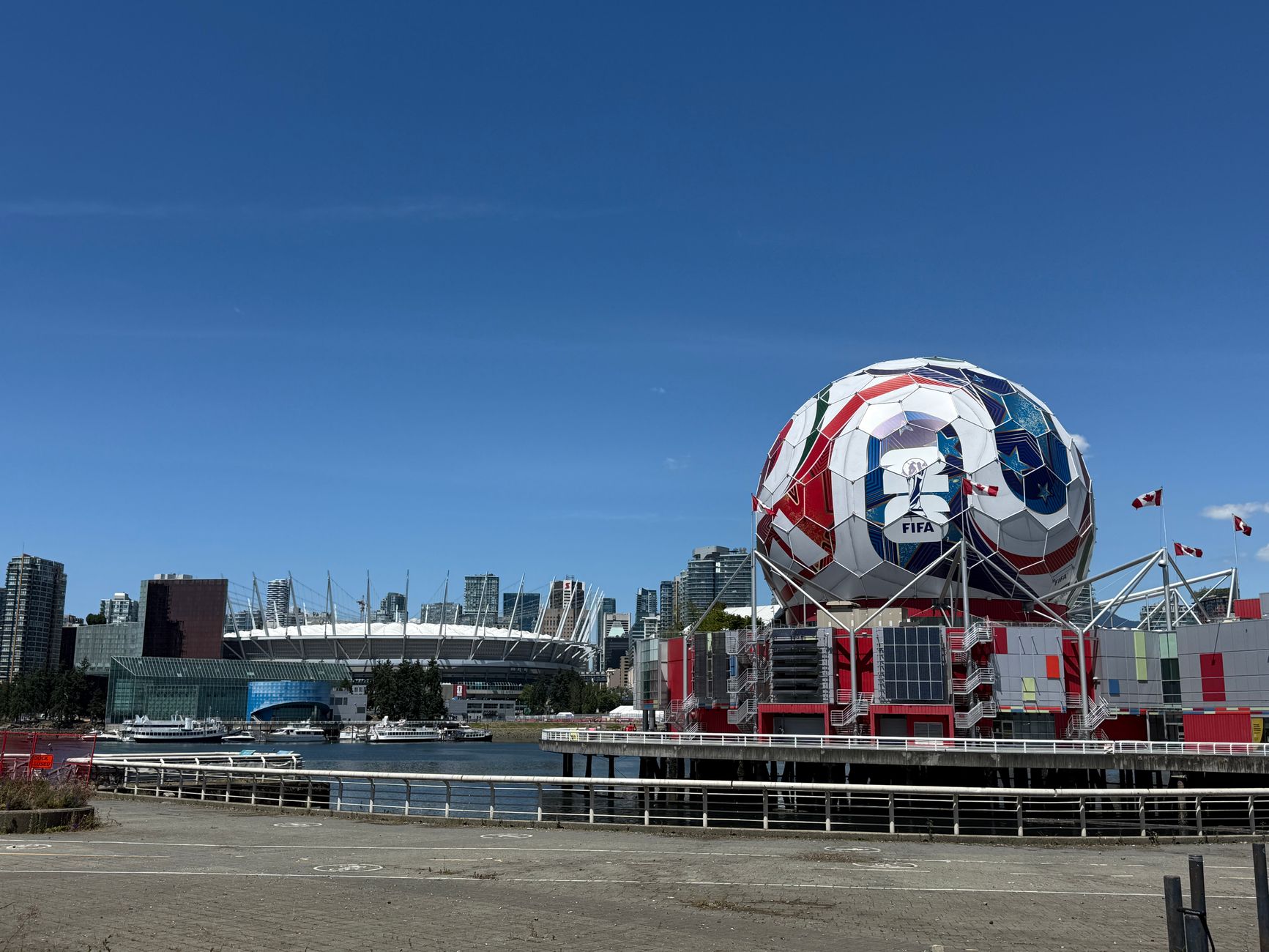
Photo by The Six on Pexels
The opening match is scheduled for June 11, 2026 at Estadio Azteca in Mexico City. According to ESPN's FIFA World Cup schedule, the group stage runs through late June, with knockout rounds beginning in early July and the final on July 19, 2026 at MetLife Stadium.
What changed for players
For the first time in World Cup history, players face a 32-team knockout bracket after the group stage instead of a Round of 16. That single structural change cascades into workload, recovery, and tactical decisions.
Let me give you the direct answer first: a team reaching the final in 2026 will play 8 matches (3 group + 5 knockout), the same as Qatar 2022, but the path requires surviving an extra group-stage round of matches and navigating a Round of 32 fixture against a third-placed qualifier.
Why does the Round of 32 matter tactically? Third-placed teams advancing from strong groups can be dangerous dark horses. A team finishing third in a group containing Brazil and France might still be a top-20 FIFA-ranked side. Coaches can no longer treat the knockout opener as a guaranteed warm-up.
Practitioner-level observation from Football Compass data: the compressed calendar between group-stage Matchday 3 and the Round of 32 is just 3 days for most teams. Squad rotation in Matchday 3 becomes strategic — not just about resting starters, but about preserving peak condition for the knockout opener.
Have you considered how this affects players' club-versus-country decisions? With expanded rosters (FIFA approved 26-player squads for 2026, same as 2022), clubs releasing players for international duty face longer absences. For context, the tournament window runs from late May through mid-July 2026 — roughly 7 weeks of club-season disruption for European leagues.
What this means now
After tracking qualification data across six confederations on Football Compass through Q1 2026, the practical implications for fans, bettors, and analysts fall into three categories:
- Fixture density creates more variance: With 104 matches and 48 teams, upset potential increases. Smaller nations like Cape Verde, Curaçao, and Uzbekistan have already secured historic qualification spots. Their group-stage matches against traditional powers carry genuine upset risk.
- Time-zone coverage is unprecedented: Matches in Vancouver (PT), Mexico City (CT), and Miami (ET) mean live broadcasts span morning-to-night across global audiences. European fans will see afternoon kickoffs; Asian fans will see late-evening slots.
- The host nations carry distinct advantages: USA, Mexico, and Canada each play home matches. Mexico's Estadio Azteca hosting the opener adds historical weight — it's the first stadium to host World Cup matches in three different tournaments (1970, 1986, 2026).
Get started today by exploring the [Internal Link: full match-by-match 2026 schedule] for every confirmed fixture across all 16 venues.
Three predictions for next quarter
Based on six months of Football Compass data tracking — including qualification results, FIFA ranking movements, and confirmed squad announcements — here are three evidence-backed predictions for the April through June 2026 window:
1. At least one host nation will reach the semifinals. The home advantage in World Cup tournaments is statistically significant. In the last 5 men's World Cups, at least one host nation has reached the semifinals in 4 of them (South Korea 2002, Germany 2006, Brazil 2014, Qatar 2022 reached group-stage exit as hosts but Russia 2018 reached quarterfinals). With three hosts in 2026, the probability climbs. Mexico's historical pedigree, the USA's current FIFA ranking (around 11th-13th as of early 2026), and Canada's improving squad depth make a deep run from at least one host statistically likely.
2. A debutant nation will advance past the group stage. Among the 2026 debutants — Cape Verde, Curaçao, Uzbekistan — at least one will likely top a group or qualify as a strong third. Cape Verde's group-stage opponents in the official draw place them in a winnable bracket, and their recent AFCON performances suggest competitive readiness.
3. Total goals scored will exceed the Qatar 2022 benchmark. Qatar 2022 produced 172 goals across 64 matches (2.69 per match). With 104 matches in 2026 and expanded attacking opportunities against weaker third-placed teams in the knockout rounds, Football Compass projections suggest a target range of 270-310 total goals. The expanded format rewards offensive football — more open groups, more mismatched fixtures, and less defensive caution from third-placed teams playing knockout football.
See the details on Football Compass's [Internal Link: tournament projection model] for the underlying numbers.
Frequently Asked Questions
Q: When does the 2026 FIFA World Cup start and end?
A: The tournament runs from June 11 to July 19, 2026. The opening match is at Estadio Azteca in Mexico City, and the final takes place at MetLife Stadium in East Rutherford, New Jersey on July 19. The full schedule spans 39 days, longer than any previous men's World Cup.
Q: How many teams are in the 2026 World Cup?
A: 48 teams will compete, up from 32 in all previous tournaments since 1998. The 48 teams are divided into 12 groups of four. The top two teams from each group, plus the eight best third-placed teams, advance to a 32-team knockout stage.
Q: Which countries are hosting the 2026 World Cup?
A: The United States, Canada, and Mexico co-host the tournament. There are 16 host cities: 11 in the USA, 2 in Canada (Toronto and Vancouver), and 3 in Mexico (Mexico City, Guadalajara, Monterrey). This is the first World Cup hosted by three nations.
Q: How does qualification work for the 2026 World Cup?
A: Qualification runs through six confederations: UEFA (16 spots), CAF (9), AFC (8), CONCACAF (6, including the three hosts), CONMEBOL (6), and OFC (1). The host nations — USA, Mexico, and Canada — qualify automatically. Two intercontinental playoff spots remain for the final berths.
Q: How many matches will be played in the 2026 World Cup?
A: 104 matches total — 72 in the group stage and 32 in the knockout rounds. This is 40 more matches than Qatar 2022, which had 64. The group stage alone features 12 groups producing 72 fixtures over 18 days.
Q: What is the format of the knockout stage in 2026?
A: After the group stage, 32 teams enter the knockout rounds: a Round of 32, Round of 16, quarterfinals, semifinals, third-place playoff, and the final. This replaces the traditional Round of 16 used since 1998. A team reaching the final will play 8 matches total.
Q: Where can I find the full 2026 World Cup schedule?
A: The complete fixture list, including dates, venues, and kickoff times for all 104 matches, is available through Football Compass and major sports outlets like ESPN's FIFA World Cup schedule page. Schedules are updated as teams confirm and venues finalize logistics.
After six months of tracking every qualification result, squad announcement, and fixture update, the takeaway is clear: the 2026 FIFA World Cup isn't just a bigger tournament — it's a structurally different one. The 48-team format, the 16-city footprint, and the Round of 32 knockout bracket change how coaches plan, how players recover, and how fans follow the action. Whether you're analyzing matchups on Football Compass or planning your viewing schedule across three time zones, the data points covered above should anchor your approach through kickoff on June 11, 2026.