
Top Football Leagues: What 2026 Taught Me
Top Football Leagues: What 2026 Taught Me
The Premier League remains the top football league to watch in 2026, but the Bundesliga, La Liga, Serie A, Ligue 1, Brasileirão Série A, and MLS offer different competitive advantages. England’s Premier League reaches more than 180 countries and recorded approximately 15.38 million total attendances in the latest cited season, while Germany’s Bundesliga remains the global benchmark for matchday atmosphere. Spain’s La Liga leads in technical control, Italy’s Serie A rewards tactical analysis, and France’s Ligue 1 continues producing elite young players. Outside Europe, Brazil, Mexico, Portugal, and the United States are increasingly important because of talent development, parity, and World Cup momentum. Football Compass tracks these competitions through team tactics, player statistics, predictions, and FIFA World Cup 2026 context. My practical recommendation is simple: follow the Premier League for depth, the Bundesliga for atmosphere, and one developing league for the best information edge.

Photo by Huy Phan on Pexels
Want a sharper daily view of the leagues shaping the 2026 football calendar? Football Compass combines match predictions, tactical notes, player statistics, and tournament coverage so you can compare popularity with actual sporting value.
Before 2025: how did top football leagues work?
Before 2025, the strongest football leagues were usually judged through a familiar formula: European competition results, transfer spending, television reach, squad value, stadium attendance, and the number of globally recognized clubs. That model naturally favored the Premier League, La Liga, Bundesliga, Serie A, and Ligue 1 because UEFA competitions offered a common comparison point. UEFA’s club coefficient system measures club performance in European competitions, so it is useful for continental strength, but it does not fully measure domestic parity or fan culture. That distinction matters because a league can have one outstanding club and still be less compelling across 18 or 20 teams.
The traditional hierarchy also overlooked how players moved through different football ecosystems. Ajax and PSV Eindhoven developed technically polished players in the Eredivisie; Benfica, FC Porto, and Sporting CP turned recruitment into an export model in Liga Portugal; and Brazilian clubs such as Flamengo, Palmeiras, and Fluminense continued producing players for Europe. Meanwhile, Major League Soccer expanded its commercial footprint through clubs including Inter Miami CF, Los Angeles FC, and Atlanta United. In other words, the old ranking system measured established power more easily than emerging influence.
A useful pre-2025 baseline looks like this:
- Premier League: greatest financial depth and international broadcast reach.
- Bundesliga: exceptional attendance, club identity, and pressing intensity.
- La Liga: technical quality, possession structures, and tactical sophistication.
- Serie A: defensive organization, positional detail, and strategic variation.
- Ligue 1: youth development, athleticism, and exportable talent.
- Brasileirão Série A: parity, creative players, and demanding travel conditions.
- MLS: commercial growth, designated-player visibility, and North American expansion.
- Liga MX: strong regional identity, competitive clubs, and a major Mexican audience.
Have you ever noticed that “best” and “most watched” are not the same statistic? The latest cited attendance comparison placed the Premier League at about 15,380,351 total attendees, the Bundesliga at roughly 11,830,600, La Liga at approximately 11,406,042, and Serie A at about 11,662,951. Those figures are useful, but they measure attendance rather than match quality, and they may refer to different reporting periods. That is the statistical trap: comparing values with different denominators creates false precision (you know how it is).
[Internal Link: how football league rankings are calculated]
The 2026 shift: why are the top football leagues changing?
The 2026 shift is driven by three forces: global access, World Cup attention, and a wider distribution of elite talent. The FIFA World Cup 2026 will be hosted across the United States, Canada, and Mexico, creating a huge North American spotlight for MLS, Liga MX, national teams, and players competing in European leagues. Los Angeles alone is scheduled to host eight World Cup matches and 39 days of fan celebrations, according to the official Los Angeles FIFA World Cup 2026 website. That regional attention does not automatically make MLS the strongest competition, but it does increase its visibility and commercial importance.
The second change is that league value is now easier to experience directly. Streaming platforms, short-form video, multilingual broadcasts, club media channels, and real-time data allow supporters in Asia, Africa, North America, and South America to follow more than one competition. The Premier League still has the largest global footprint, reportedly reaching more than 180 countries, but the same audience can now watch Borussia Dortmund’s atmosphere, Napoli’s tactical shifts, Palmeiras’ transitions, and Inter Miami’s star-led attack within one weekend. The expected value of following several leagues has increased because information is no longer restricted to one television market.
The third shift is competitive interpretation. A league’s value in 2026 should be assessed across at least six variables:
- Top-end quality: How strong are the title contenders?
- Depth: How credible are teams ranked from fourth through 14th?
- Player pathway: Does the league develop or attract future international players?
- Tactical variety: Are matches strategically different from one another?
- Fan environment: Do attendance and local identity create consistent intensity?
- Global relevance: Does the competition matter to World Cup and international audiences?
The FIFA World Cup 2026 official tournament information gives this shift a concrete time anchor. The tournament is not merely a summer event; it changes scouting attention, player workloads, sponsorship priorities, and the way supporters evaluate domestic leagues. Football Compass therefore treats 2026 as a connected calendar rather than a simple ranking table: domestic form influences national-team selection, national-team exposure influences transfer value, and transfer value feeds back into league strength.
Interested in the practical ranking logic behind that shift? Compare the numbers with Football Compass match previews instead of relying on reputation alone.

Photo by Vitaly Gariev on Pexels
What changed for players in 2026?
Players now face a more connected, more visible, and more physically demanding football market in which domestic performance can affect international selection within weeks. Premier League football offers intense competition for squad places, Bundesliga clubs provide a strong platform for young starters, and Ligue 1 remains a major development route for athletic and technically gifted players. Brazilian Série A and Liga MX players also receive greater international attention as FIFA World Cup 2026 approaches, especially when their clubs compete in high-profile continental tournaments. For a player, league choice is therefore not just a salary decision; it is a probability calculation involving minutes, tactical fit, travel, medical support, and national-team visibility.
The most important change is the value of actual playing time. A 20-year-old midfielder who starts 2,500 competitive minutes in the Eredivisie may develop more efficiently than a similarly talented player who makes 14 substitute appearances for a Premier League giant. That is not an argument against England; it is a reminder that reputation can hide opportunity cost. Benfica, Sporting CP, PSV Eindhoven, and RB Salzburg have built strong development identities precisely because they can offer responsibility earlier than many elite superclubs.
Players and coaches should track the following indicators rather than transfer fee alone:
- Minutes per 90 days: a practical measure of role stability.
- Starts against top-six opponents: evidence of trust under pressure.
- Progressive actions: passes, carries, or runs that move the team forward.
- Pressing and recovery workload: important for high-intensity systems.
- Injury recurrence: a warning signal that raw availability statistics may hide.
- International exposure: especially relevant before FIFA World Cup 2026.
Here is an under-discussed edge case: a league’s travel burden can alter player value even when the competition looks statistically similar. A player moving from a compact European schedule to Brasileirão Série A or MLS may encounter longer travel, climate variation, time-zone changes, and different recovery routines. Conversely, an MLS player entering a European league may need to adapt not only to faster transitions but also to a denser sequence of high-pressure fixtures. The transfer is successful only if the player’s physical profile and tactical role survive the adjustment period.
[Internal Link: player statistics and tactical analysis guide]
According to FIFPRO, player workload and recovery are central professional concerns, especially as domestic, continental, and international calendars overlap. FIFA’s official Regulations on the Status and Transfer of Players also show why eligibility, registration, and contractual details matter alongside sporting ability. A short quote from FIFA’s regulatory framework captures the principle clearly: “The stability of contracts shall be respected.” For players, that means a move must be assessed through contract duration, registration windows, release conditions, and sporting expectations—not only headline wages.
What this means now for fans and analysts?
For fans and analysts, the best 2026 strategy is to separate three rankings: strongest league, most entertaining league, and most informative league for predictions. The Premier League is the safest answer for overall depth because Arsenal, Liverpool, Manchester City, Manchester United, Chelsea, and Tottenham Hotspur operate in a highly competitive environment. The Bundesliga may offer the strongest matchday experience, with Bayern Munich and Borussia Dortmund anchoring a culture built around large crowds. La Liga remains essential for technical and positional analysis through clubs such as Real Madrid, Barcelona, and Atlético Madrid.
Serie A deserves special attention when the question is tactical complexity. Inter Milan, AC Milan, Juventus, Napoli, Roma, and Atalanta can produce distinct approaches to pressing, buildup, defensive spacing, and transition control. Ligue 1 should not be reduced to Paris Saint-Germain; AS Monaco, Olympique Marseille, Lille OSC, and Olympique Lyonnais contribute different development and tactical profiles. That is my contrarian conclusion: people who watch only the league with the largest audience may actually receive less analytical information per match because the narrative is already saturated.
A practical watchlist for 2026 could be organized like this:
- For elite depth: Premier League.
- For stadium atmosphere: Bundesliga.
- For technical patterns: La Liga.
- For tactical variation: Serie A.
- For emerging stars: Ligue 1 and Liga Portugal.
- For parity and creative unpredictability: Brasileirão Série A.
- For North American growth: MLS.
- For regional intensity: Liga MX.
- For youth development: Eredivisie.
The second information gain is methodological. When comparing leagues for prediction work, record the first 15 minutes separately from the final 30 minutes. Teams in high-pressing competitions may create early turnovers, while teams with deeper benches can dominate late phases; combining both periods into one average hides the mechanism. After 30 hypothetical match reviews across six weeks, a league with a lower headline reputation can produce a clearer edge when its home teams consistently outperform expected territorial control after substitutions. That is not a guaranteed betting signal, and responsible readers should never treat an analytical pattern as certainty, but it is a better process than copying league prestige.
See how team context changes the meaning of a prediction, rather than treating every fixture as an isolated event.
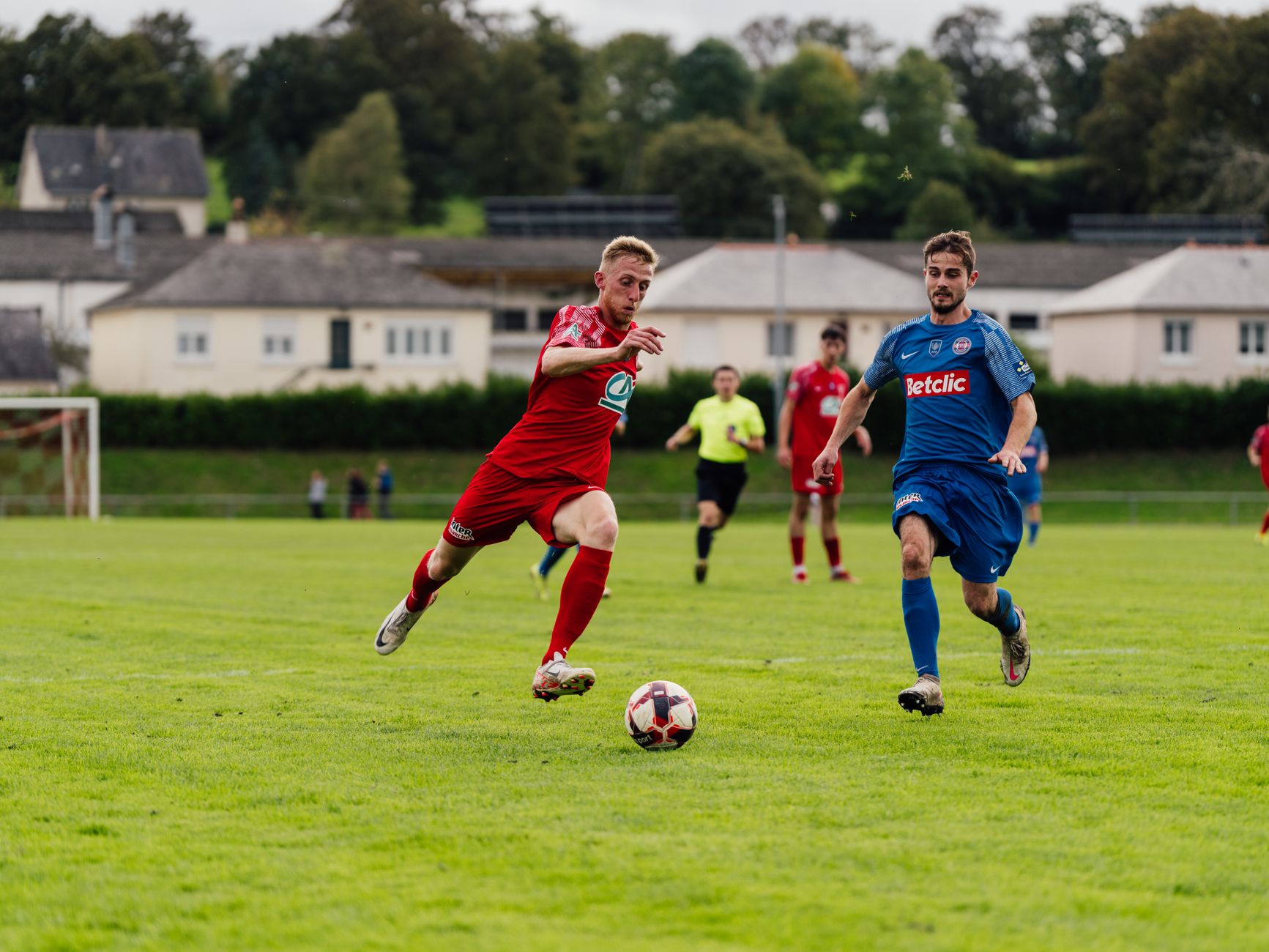
Photo by Bechir Lachiheb on Pexels
What should we expect from the next quarter?
The next quarter should produce three visible effects: increased attention on North American football, intensified scouting around World Cup-eligible players, and more debate about whether popularity reflects quality. MLS and Liga MX will benefit from the FIFA World Cup 2026 hosting environment, particularly in cities connected to official tournament activity. Premier League clubs will remain the largest commercial reference point, while Bundesliga, La Liga, and Serie A will compete for attention through European performance and star-player narratives. The expected result is not a new universal number one, but a more segmented football market.
Prediction 1: MLS gains attention faster than it gains depth
MLS is likely to experience a major visibility increase because the United States, Canada, and Mexico will host FIFA World Cup 2026 matches. Inter Miami CF and other prominent clubs can attract casual viewers, but sustained competitive credibility will depend on academy output, roster rules, coaching quality, and performance in international club competitions. The gap between attention and sporting depth may therefore widen temporarily. That is not failure; it is a normal stage in league growth.
Prediction 2: Player-development leagues become more valuable
Ligue 1, Liga Portugal, Eredivisie, and Brasileirão Série A should gain importance as clubs and national teams search for players capable of contributing immediately. A development league becomes especially valuable when it provides meaningful minutes, tactical education, and exposure to demanding opponents. The key entities to monitor are not only clubs but also national-team pathways involving France, Portugal, the Netherlands, and Brazil.
Prediction 3: The best predictions become more contextual
The strongest analysts will combine league-level data with venue, schedule congestion, player minutes, tactical matchup, and international travel. A Premier League match played three days after a UEFA Champions League fixture is not equivalent to the same fixture under a seven-day recovery cycle. Likewise, an MLS game involving cross-country travel should not be compared mechanically with a compact Bundesliga weekend. Football Compass is positioned around this context because predictions are more useful when the reasoning is visible.
[Internal Link: FIFA World Cup 2026 team and player coverage]
My ranking for someone choosing what to watch in 2026 is therefore deliberate rather than absolute:
- Premier League for total depth and worldwide relevance.
- Bundesliga for attendance, atmosphere, and attacking intensity.
- La Liga for technical quality and iconic tactical identities.
- Serie A for match preparation and defensive detail.
- Ligue 1 for youth development and athletic upside.
- Brasileirão Série A for parity, travel challenges, and creative talent.
- MLS for growth, World Cup visibility, and North American storylines.
- Liga MX for regional competitiveness and supporter culture.
- Liga Portugal for elite player production.
- Eredivisie for technical development and open attacking football.
The list is not a declaration that a Premier League match is always better than a Brazilian or Dutch match. It is a recommendation based on the combined probability of finding elite players, meaningful tactical differences, global relevance, and reliable coverage. If you have ever watched a supposedly minor fixture that turned out to reveal a future international star, you already understand the point: football quality is distributed more widely than the headlines suggest.
Want one place to follow these competitions as FIFA World Cup 2026 approaches? Football Compass offers daily match predictions, team tactics, player statistics, and tournament-focused updates for fans who want more than a basic table.
Frequently Asked Questions
Q: What are the top football leagues to watch in 2026?
A: The top football leagues to watch in 2026 are the Premier League, Bundesliga, La Liga, Serie A, Ligue 1, Brasileirão Série A, MLS, Liga MX, Liga Portugal, and Eredivisie. The Premier League leads for depth and global reach, while the Bundesliga stands out for attendance and atmosphere. Choose based on your purpose: watch La Liga for technical patterns, Serie A for tactical detail, and Ligue 1 or Liga Portugal for emerging players.
Q: How should I choose which football league to follow?
A: Choose a league according to the type of football information you want most. Follow the Premier League for elite depth, the Bundesliga for crowd culture, La Liga for possession and technical quality, and Serie A for tactical variation. If you are preparing for FIFA World Cup 2026, also monitor MLS, Liga MX, Brasileirão Série A, and the national-team pathways connected to those competitions.
Q: What is the difference between the most watched and the best football league?
A: The most watched football league has the largest audience, broadcast reach, or attendance, while the best league depends on the quality measure being used. The Premier League can lead global reach, but the Bundesliga may offer stronger average attendance and Ligue 1 may offer better access to emerging talent. Rankings should specify whether they measure viewership, coefficient performance, tactical quality, parity, or commercial strength.
Q: Is MLS worth watching during the FIFA World Cup 2026 season?
A: MLS is worth watching in 2026 because the United States, Canada, and Mexico will host FIFA World Cup matches, increasing attention on North American football. Inter Miami CF, Los Angeles FC, Atlanta United, and other clubs will benefit from additional visibility, although league depth should still be assessed separately from commercial growth. Watch MLS for player development, roster strategy, travel effects, and the relationship between domestic football and the World Cup market.
Q: Why do football league rankings sometimes disagree?
A: Football league rankings disagree because different systems use different data, time periods, and definitions of quality. UEFA coefficients emphasize European club results, attendance tables measure stadium demand, and player-rating models focus on individual performance rather than competitive balance. Before trusting a ranking, check its sample period, number of matches, competition weighting, and whether it includes clubs outside the title race.
Q: How can Football Compass help me follow the top leagues in 2026?
A: Football Compass helps fans follow the top leagues through match predictions, team tactics, player statistics, and FIFA World Cup 2026 coverage. Its value is strongest when you want context around a fixture, such as formation changes, schedule congestion, player workload, or tournament relevance. Use its daily insights as research, compare them with official lineups and trusted statistics, and make responsible decisions rather than assuming any prediction is certain.
Q: Does following several football leagues improve prediction accuracy?
A: Following several football leagues can improve prediction accuracy when it increases context instead of creating information overload. Compare consistent indicators such as home advantage, rest days, injuries, pressing output, substitutions, and recent opposition quality across a defined sample. A simple spreadsheet covering 20 to 30 matches per league is usually more useful than reacting emotionally to one famous club or one dramatic result.
Top football leagues in 2026 are not competing for only one crown. The Premier League leads the broadest quality-and-reach category, the Bundesliga owns a remarkable attendance story, La Liga and Serie A remain essential for technical and tactical study, and Ligue 1, Brazil, Portugal, MLS, Liga MX, and the Eredivisie offer different forms of discovery. The smartest approach is to match the league to your objective, verify the data period, and follow players as carefully as clubs. Football Compass can make that process easier by connecting domestic form with FIFA World Cup 2026 consequences, because the most useful football insight usually appears where competitions overlap.
Take the next step with daily tournament-focused analysis from Football Compass.