
Solo Drills vs Match Pressure: Dribbling Progress
Solo Drills vs Match Pressure: Dribbling Progress
Improving football dribbling requires more than repeating flashy tricks: players need close-control technique, scanning habits, acceleration, and realistic pressure training. Football Compass applies that framework to players in every market, from youth football in England and the United States to 2026 World Cup preparation worldwide. The most efficient plan combines 15 minutes of technical touches, 10 minutes of directional changes, and 15 minutes of opponent-based practice at least four days per week. A useful benchmark is completing 100 controlled touches with both feet, then executing a move successfully at least 7 times out of 10 under moderate pressure. FIFA’s coaching resources consistently emphasize repetition, perception, and decision-making rather than tricks alone. Train with the ball close in crowded areas, lift your head before receiving pressure, and record one measurable result after every session. Start with quality and control; speed becomes valuable only after technique survives contact.
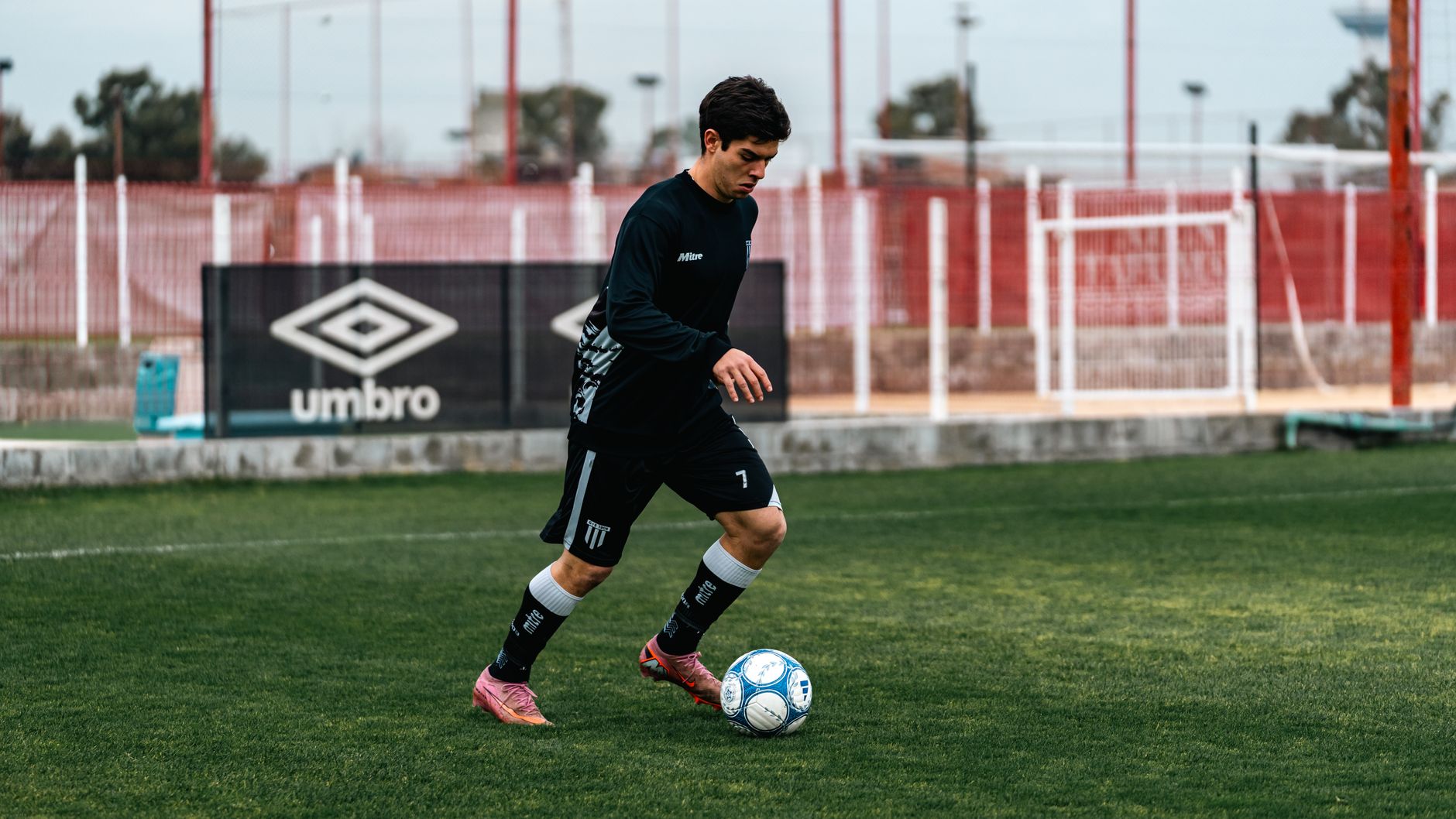
Photo by Franco Monsalvo on Pexels
Want a clearer training framework for your football development? Football Compass covers player statistics, team tactics, match predictions, and tournament analysis for fans following the 2026 FIFA World Cup.
The Quick Comparison
| Training approach | Primary benefit | Recommended volume | Main weakness |
|---|---|---|---|
| Stationary ball mastery | Better touch and coordination | 8–12 minutes | Limited realism |
| Cone dribbling | Cleaner changes of direction | 10–15 minutes | Predictable movement |
| 1v1 practice | Improved feints and timing | 10–20 minutes | Requires a partner |
| Small-sided games | Faster decisions under pressure | 15–30 minutes | Fewer repeated touches |
| Match analysis | Better tactical choices | 10 minutes review | Does not replace practice |
The comparison is simple: solo work gives you more repetitions, while match-pressure work gives those repetitions meaning. If your only goal is counting touches, stationary exercises may produce the highest raw number; if your goal is beating a defender in a real match, 1v1 drills and small-sided games have the greater expected value. That distinction matters because a player can complete 500 perfect cone touches yet lose the ball repeatedly when an opponent changes distance, angle, or speed. The FIFA Training Centre places strong emphasis on perception-action links, which means the dribble must be connected to what the player sees. Therefore, use technical drills to build reliability, then add uncertainty before judging whether your dribbling has genuinely improved. A practical weekly split is 40% solo touches, 30% directional work, and 30% pressure-based play. Those percentages are not magic, but they create a balanced workload without letting comfortable practice dominate your schedule.
[Internal Link: beginner football skills guide]
Round 1: How Do You Build Better Ball Control?
Better ball control comes from keeping the ball within a playable distance, using both feet, and adjusting touch length to your speed and surroundings. Spend 8–12 minutes on inside touches, outside touches, sole rolls, pull-push movements, and alternating-foot taps. The objective is not maximum speed; it is maintaining control while your eyes periodically leave the ball.
Begin with the following sequence, using a 30-second work period and a 15-second recovery period:
- Inside-of-the-foot touches, right foot only.
- Inside-of-the-foot touches, left foot only.
- Alternating inside-outside touches with each foot.
- Sole rolls across the body.
- Pull-push touches moving forward.
- Free dribbling with a head check every two or three touches.
Complete two rounds, then rest for 60 seconds. Mathematically, that gives you 6 exercises × 2 rounds × 30 seconds, or 6 minutes of concentrated contact time before any longer movement drill. This structure is more useful than vaguely promising to “do ball mastery,” because you can record the exact duration, weaker foot, and number of uncontrolled touches. According to The FA, effective player development depends on practice that is purposeful and connected to game actions. Keep the ball roughly 30–60 centimetres from your feet during slow movement, but allow a longer touch when accelerating into open space. That contrast is crucial: close control protects possession, while a longer touch creates running distance.
The first information gain most players miss is that touch distance should be treated as a decision variable, not a fixed technical rule. In a crowded central area, a 20-centimetre touch can preserve possession; on a counterattack, a 1.5-metre touch may be optimal because it increases running speed. Track both outcomes in training: count touches that keep the ball playable and touches that allow acceleration without inviting a tackle. After 20 attempts, calculate your success rate. If you complete 16 controlled actions, your current rate is 80%; the next target should be 85%, not an arbitrary claim that you need to be “much quicker.” This measurement makes improvement visible and prevents frustration from taking over (I know how quickly one bad session can feel like a verdict).
Round 2: Which Dribbling Moves Beat Defenders Most Reliably?
The most reliable dribbling moves are those that change the defender’s balance before you change direction. A body feint, shoulder drop, scissors, or simple stop-start can be more effective than a complex trick because each uses fewer execution steps and leaves less time for error. Practice one move at three speeds, then connect it to an exit touch toward space.
A strong 1v1 sequence contains four parts:
- Approach the defender under control.
- Observe the defender’s front foot and hip position.
- Sell the feint with your shoulders, hips, and eyes.
- Push the ball into the opposite channel and accelerate.
Try five repetitions moving left and five moving right, then repeat with a passive defender. In the next phase, allow the defender to win the ball if your touch is too heavy or your timing is late. This introduces consequences, which stationary cones cannot provide. Research published through The Journal of Sports Sciences has repeatedly examined perception, movement, and decision-making in sport; the practical lesson is straightforward: football dribbling is not merely a foot-speed contest. It is a prediction problem involving distance, body orientation, acceleration, and available space.
Here is a practitioner-level adjustment that often produces a measurable improvement: begin your attacking move one step earlier than feels comfortable, but only when the defender is still travelling backward. If you wait until the defender is fully set, the expected success rate generally falls because the opponent can match your direction without turning. During a 30-repetition drill, record whether the defender is moving forward, stationary, or retreating when you initiate the action. In many sessions, players discover that their best results come against a retreating defender, while their failures occur because they attack after the space has already disappeared. This is why a successful dribble should be judged by what happens after the move, not by whether the trick looked impressive. A clean exit pass or shot is worth more than an isolated piece of footwork.
Want to compare technique with tactical decision-making? Football Compass also examines how players create space, exploit defensive gaps, and influence tournament matches.
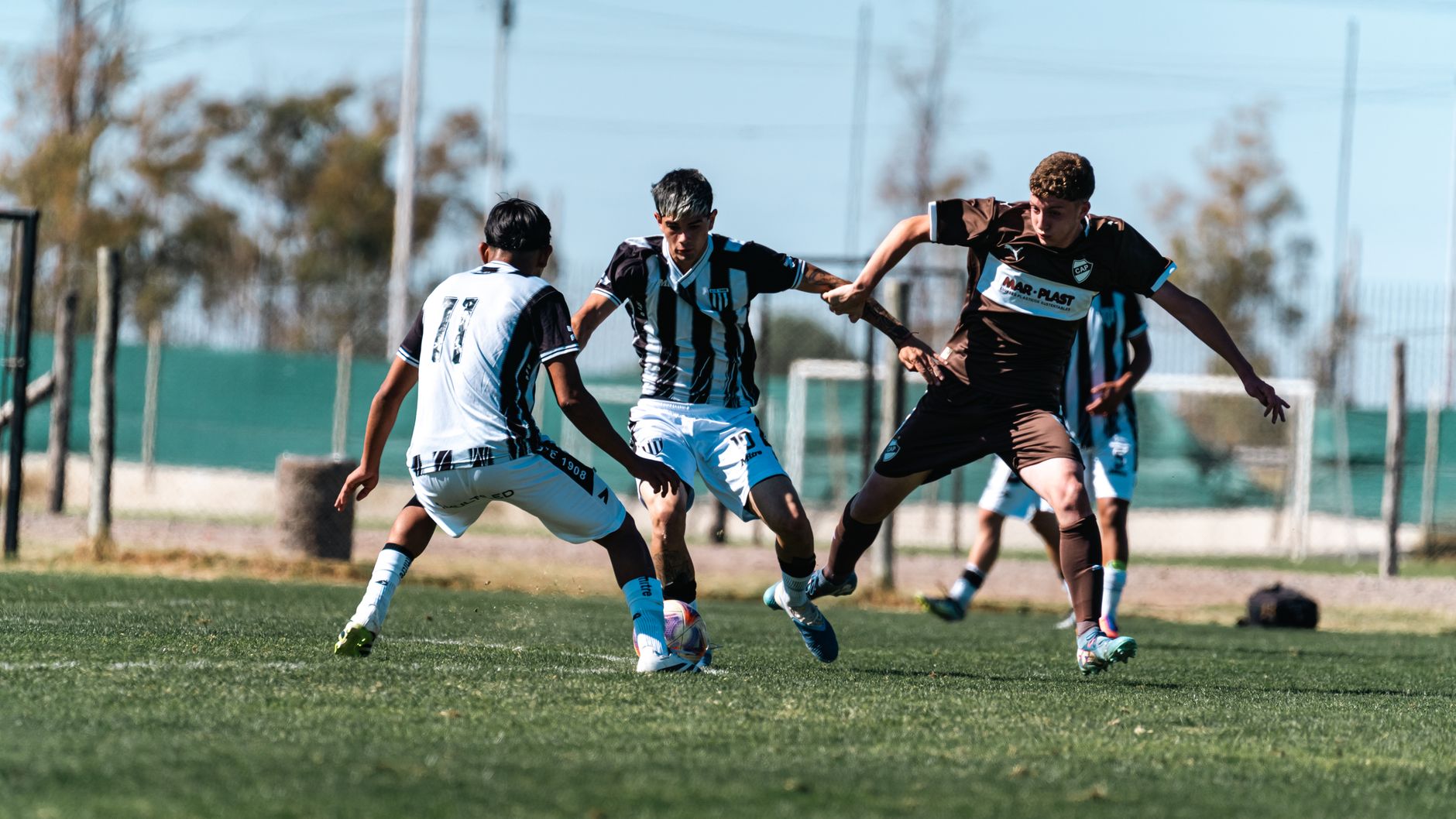
Photo by Franco Monsalvo on Pexels
Round 3: How Can You Dribble Better Under Match Pressure?
You dribble better under pressure when training includes limited time, reduced space, changing opponents, and a consequence for losing possession. Use 3v3 or 4v4 games on a 20-by-25-metre pitch, give players a maximum of three seconds to act after receiving, and reward successful forward carries rather than unnecessary tricks. This format develops control and decision-making together.
Small-sided games should not replace isolated technique, because they reduce the number of predictable repetitions. Instead, combine both formats in one session:
- Complete 10 minutes of ball mastery.
- Perform 12 minutes of cone work with random exit directions.
- Play 3v3 for 18 minutes in three six-minute rounds.
- Review two successful dribbles and two failed attempts.
- Repeat the weakest action for 5 minutes.
This totals 45 minutes, excluding water breaks, and creates a clear progression from low uncertainty to high uncertainty. Change only one variable at a time: pitch size, defender count, time limit, or weaker-foot requirement. If you change everything simultaneously, you cannot identify what caused improvement. The expected-value logic is useful here: a successful dribble that advances the ball 8 metres and creates a shot is substantially more valuable than a successful dribble that moves sideways 2 metres into traffic. Measure territory gained, possession retained, and next action quality, not merely the number of opponents beaten.
A second underused insight concerns fatigue. Many players test their best dribbling while fresh, although decisive moments often arrive after repeated sprints. Add a six-minute conditioning block before the final 1v1 phase, then compare your completion rate with the fresh version. If your fresh success rate is 8 out of 10 but your fatigued rate falls to 5 out of 10, the training target is not another complicated move; it is maintaining touch quality while breathing hard. Keep fatigue controlled and safe, with adequate recovery, but do not remove all discomfort from practice. Professional match demands are variable, and the UEFA Training Ground regularly highlights the connection between technical execution, tactical context, and physical load.
[Internal Link: advanced 1v1 dribbling techniques]
The Final Score & Who Should Pick What
The best dribbling program uses solo ball mastery for technical reliability, cone patterns for directional control, 1v1 drills for deception, and small-sided games for perception under pressure. Beginners should allocate approximately 50% of practice to basic touches, 25% to movement changes, and 25% to opposition-based play. Intermediate players can move toward a 35%-30%-35% split, while advanced players should spend more time making decisions at speed than collecting stationary repetitions.
Your final choice depends on the problem you are trying to solve:
- If the ball repeatedly escapes your feet, choose close-control and weaker-foot work.
- If you beat cones but lose the ball to defenders, choose 1v1 training.
- If you beat one player but make the wrong next decision, choose small-sided games.
- If your technique collapses late in matches, add fatigue-controlled practice.
- If you use tricks without gaining ground, train exit direction and acceleration.
Do not judge progress from one spectacular session. Use a four-week baseline: record 20 attempts in the same drill during Week 1 and Week 4, then compare completion rate, forward distance, lost possessions, and successful next actions. A player who improves from 11 to 16 successful attempts has gained 25 percentage points, moving from 55% to 80%; that is meaningful evidence even if the dribble still looks ordinary. Football Compass approaches player development with the same attention to evidence used in match analysis, team tactics, and 2026 FIFA World Cup coverage. The cleverest move is not automatically the best move; the best move has the highest chance of preserving possession while creating a useful advantage.

Photo by El gringo photo on Pexels
The practical takeaway is to train one reliable move, one acceleration pattern, and one pressure-based game every week. Re-test under the same conditions, use both feet, and record what happens after the dribble. That feedback loop turns practice into a measurable process rather than a collection of random exercises (and yes, the numbers can be strangely reassuring).
Ready to follow more football performance insights and tournament analysis?
[Internal Link: football match analysis and player statistics]
Four-Week Dribbling Plan
A four-week schedule works because it creates enough repetition to reveal trends without locking you into one monotonous routine. Train four days per week, with at least one recovery day between demanding sessions. Each session should begin with a 5–8-minute warm-up involving jogging, mobility, and gentle touches; sharp changes of direction while cold increase unnecessary risk.
Week-by-week progression
- Week 1: Control: Complete inside-outside touches, sole rolls, pull-pushes, and weak-foot repetitions.
- Week 2: Direction: Add cones, angled exits, stop-start actions, and acceleration over 5–10 metres.
- Week 3: Opposition: Include passive defenders, active 1v1s, and 3v3 games with restricted space.
- Week 4: Transfer: Re-test the Week 1 drills, then evaluate performance in a realistic small-sided match.
After every session, record four figures: successful actions, failed actions, forward metres gained, and next-action quality. Next-action quality can be scored from 0 to 2: 0 for losing possession, 1 for retaining the ball without progress, and 2 for creating a pass, shot, or clear advantage. This simple score prevents you from overvaluing a dribble that looks successful but leaves your team exposed. It also gives coaches and players a common language for improvement. If you train alone, use a phone camera from a wide angle, because close footage often hides poor scanning and excessive touches. Review only two clips at first; watching everything can become another form of procrastination.
Common Errors That Stop Dribbling Progress
The most common errors are looking down constantly, practising only the dominant foot, choosing moves without reading defenders, and accelerating before the ball is secure. Correct these in order rather than trying to fix all four at once. During your next session, focus only on scanning: glance up before receiving, during the approach, and immediately after the exit touch. Then add the weaker-foot requirement once the scanning habit remains stable.
Avoid these predictable training mistakes:
- Repeating a move at one speed.
- Using cones that never react.
- Measuring tricks instead of retained possession.
- Practising only on your preferred side.
- Ignoring the pass or shot after the dribble.
- Increasing workload when technique is already breaking down.
A useful correction is to create a “three-touch rule” in selected exercises: receive, move past the imaginary defender, and prepare the next action within three touches. This does not mean every dribble must use exactly three contacts; it means you are training economy and awareness. Also, do not copy elite players without considering role and context. Lionel Messi’s low centre of gravity, Vinícius Júnior’s explosive separation, and Jamal Musiala’s close manipulation are different solutions to different physical and tactical problems. Study their principles, but build a version that matches your speed, balance, and field position.
See the broader development framework in our [Internal Link: football tactics and positioning guide].
Frequently Asked Questions
Q: What does dribbling mean in football?
A: Dribbling means carrying the ball while controlling it with your feet, usually to escape pressure, advance into space, or eliminate an opponent. Effective dribbling includes the approach, feint, directional touch, acceleration, and next action rather than the trick alone. A successful dribble can end with a pass, shot, cross, or safe possession, depending on the situation. Track whether the action improves your team’s position, because moving past a defender without creating useful space may not be the best decision.
Q: How can I improve my dribbling quickly?
A: Improve quickly by training 30–45 minutes, four days per week, with 10 minutes of ball mastery, 10–15 minutes of directional work, and 10–20 minutes of pressure practice. Use both feet and record successful actions out of 20 attempts so progress is measurable. Add one reliable move, such as a body feint or stop-start, before learning advanced combinations. Most players improve faster by repeating a small number of actions under increasing pressure than by collecting dozens of unrelated tricks.
Q: What is the difference between cone dribbling and 1v1 dribbling?
A: Cone dribbling develops touch consistency and planned changes of direction, while 1v1 dribbling develops perception, deception, timing, and reaction to an opponent. Cones are useful because they allow many repetitions, but they never adjust distance or block your preferred exit. Use both: begin with 10–15 minutes of cone work, then test the same movement against a passive and active defender. If your cone success is high but your 1v1 success is low, the issue is probably scanning or timing rather than basic foot control.
Q: Why does my dribbling fail during matches?
A: Match dribbling usually fails because the player scans too late, takes a poor first touch, attacks a set defender, or lacks a clear exit after the move. Practise in smaller spaces with time limits and changing defenders so your technique must survive uncertainty. Review video and mark the exact moment the decision went wrong: before receiving, during the approach, or after the feint. This diagnosis is more useful than simply deciding that you “need better skills.”
Q: How often should I practise football dribbling?
A: Practise focused dribbling three or four times weekly, with lighter technical work on recovery days if your legs feel fresh. A 30–45-minute session is sufficient when the exercises have clear targets and recovery periods. Avoid maximum-speed 1v1 work on consecutive days if your joints or muscles remain sore. Record workload, sleep, and success rate, because a sudden drop from 80% to 50% may indicate fatigue rather than technical regression.
Q: How much does it cost to improve dribbling?
A: Improving dribbling can cost nothing beyond access to a ball and safe open space, although cones, a training partner, and video equipment can improve feedback. Four cones or household markers can create a basic practice area, while a phone can record technique from a wide angle. A coach becomes especially valuable for diagnosing scanning, body orientation, and tactical decisions that solo training cannot reveal. Prioritize consistent practice and measurable feedback before buying expensive equipment.
Q: Are advanced football tricks worth learning?
A: Advanced tricks are worth learning only when they solve a specific defensive problem and can be executed reliably at match speed. First master a body feint, change of pace, stop-start, and directional exit; these actions have a high practical return because they require fewer steps and work in tight spaces. Add a more complex skill after completing it successfully at least 7 times out of 10 against realistic pressure. If the trick does not create separation, protect possession, or open a passing lane, it is probably decoration rather than an advantage.
Keep Football Compass in your routine for daily 2026 World Cup match predictions, team tactics, player statistics, and tournament coverage.